The Casual Way
I like calling my method casual because I think it imparts the relaxed approach I take to rockhounding, but I don’t want to mislead anyone. You should be mindful of what you are doing at all times. And you do actually have to get out there and do some work. You’ll probably find yourself driving in circles occasionally. You’ll likely get wet, and certainly at least your hands will get dirty. But you don’t need mining equipment or a geology degree or any other kind of special expertise to find and enjoy amazing rocks. You can look for rocks anytime, anywhere. We like making it a part of other things. For us, it’s often worked into a camping trip so it’s not our sole reason for going somewhere. That way, if we don’t find anything exciting, we can still enjoy our time together. And that’s the main premise behind The Casual Method: having fun above all else (safely and respectfully). Here are my suggestions for making the most of it.
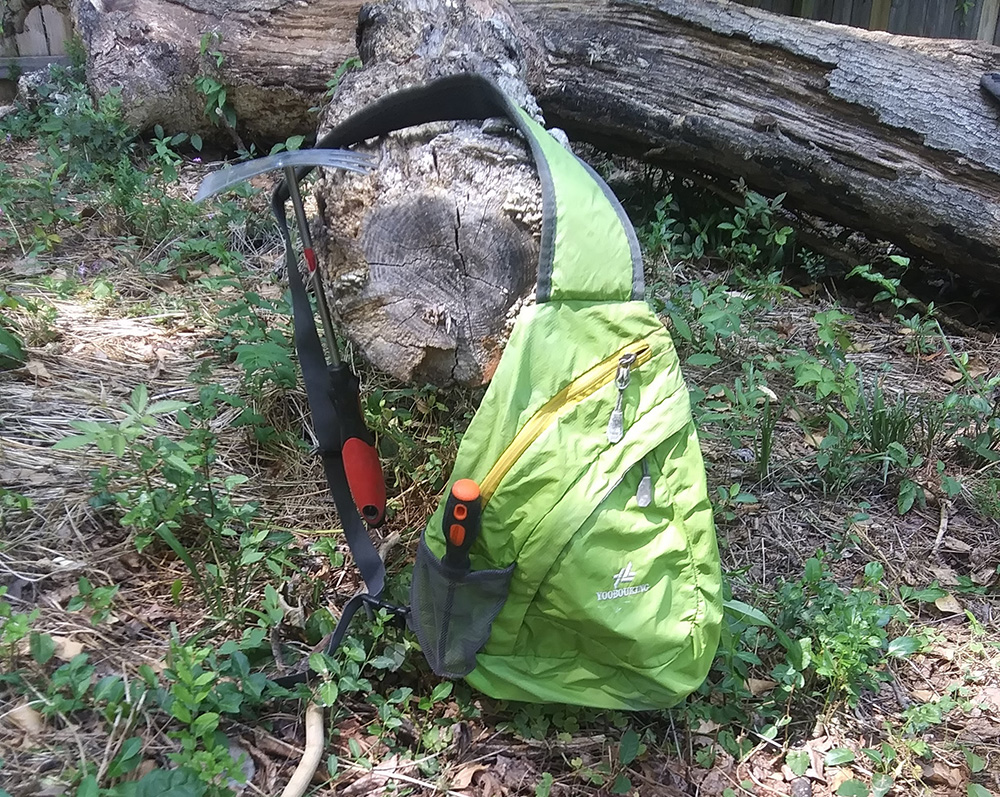
Again, you don't have to spend a dime to hunt for rocks. These are just a few things I have found helpful when rockhounding. Apart from the GPS, they are very inexpensive!
- Bags or buckets to carry your treasures in. I try to keep old grocery bags in the trunk just in case I find rocks! If I have fully planned for rockhounding, I also carry a crossbody bag or fanny pack for special finds. Pockets, if you have any, usually don’t cut it space-wise, and you may end up exploring far away from your vehicle. You’ll also want something to protect your car from dust, moisture, etc., if you are transporting your finds.
- Gloves to protect your hands. I am not a huge fan of most bugs or crayfish, and I especially don’t like handling them bare handed. I usually end up taking my gloves off, however, because I find them difficult to work in.
- A spade or a long screwdriver. I like having these on hand to move around the bigger rocks and poke at anything else I don’t want to touch since I have such a hard time leaving gloves on. We have a light camping spade that folds up and slips into a canvas pouch, making it easy to carry.
- A pair of water shoes. You can also wear a pair of old shoes you don’t mind being frequently submerged in water, but make sure to take along a dry pair for the walk/drive home. The shoes should have good grip.
- GPS. This is nice to have as a backup since cell service can be spotty, especially in the mountains. You can and should download maps to your phone, but they do take up space.
- First and foremost, stay away from private property. I have seen a lot of No Trespassing signs while out rockhounding. That said, just because you don't see a sign doesn’t mean you’re welcome. There are plenty of public places to look (like schools, state parks and roadsides) without the risk of breaking a law — or worse. Plus, a lot of people will allow you to look on their property if you are just polite in asking.
- Talk to locals. Many of the places you visit and drive through will be smaller towns. If we are looking for something specific, we will stop at local shops and restaurants and ask questions while eating or gassing up. Most will happily tell you what they know, especially if you are patronizing their business.
- Look up the geological history of your state. Crossreference that with locations mentioned on rockhounding websites. Just keep in mind that places to hunt for rocks come and go. Don't drive too far without in some way confirming as many details as possible, especially if the location isn't public or well-documented.
- Consult tax records. Almost all counties keep records online. You can search by address, pull up a map and click on surrounding parcels to see who owns what and if there are any publicly accessible sites nearby.
- Start at home. Pick up rocks outside your house and different spots around your town. Head to any kind of waterway. Rivers and creeks are usually full of interesting rocks. Take rocks home and see if you can identify them. If you have trouble figuring something out, there's probably a professor at a nearby college who loves sharing their expertise. Local experts are also good sources for leads on places to visit.